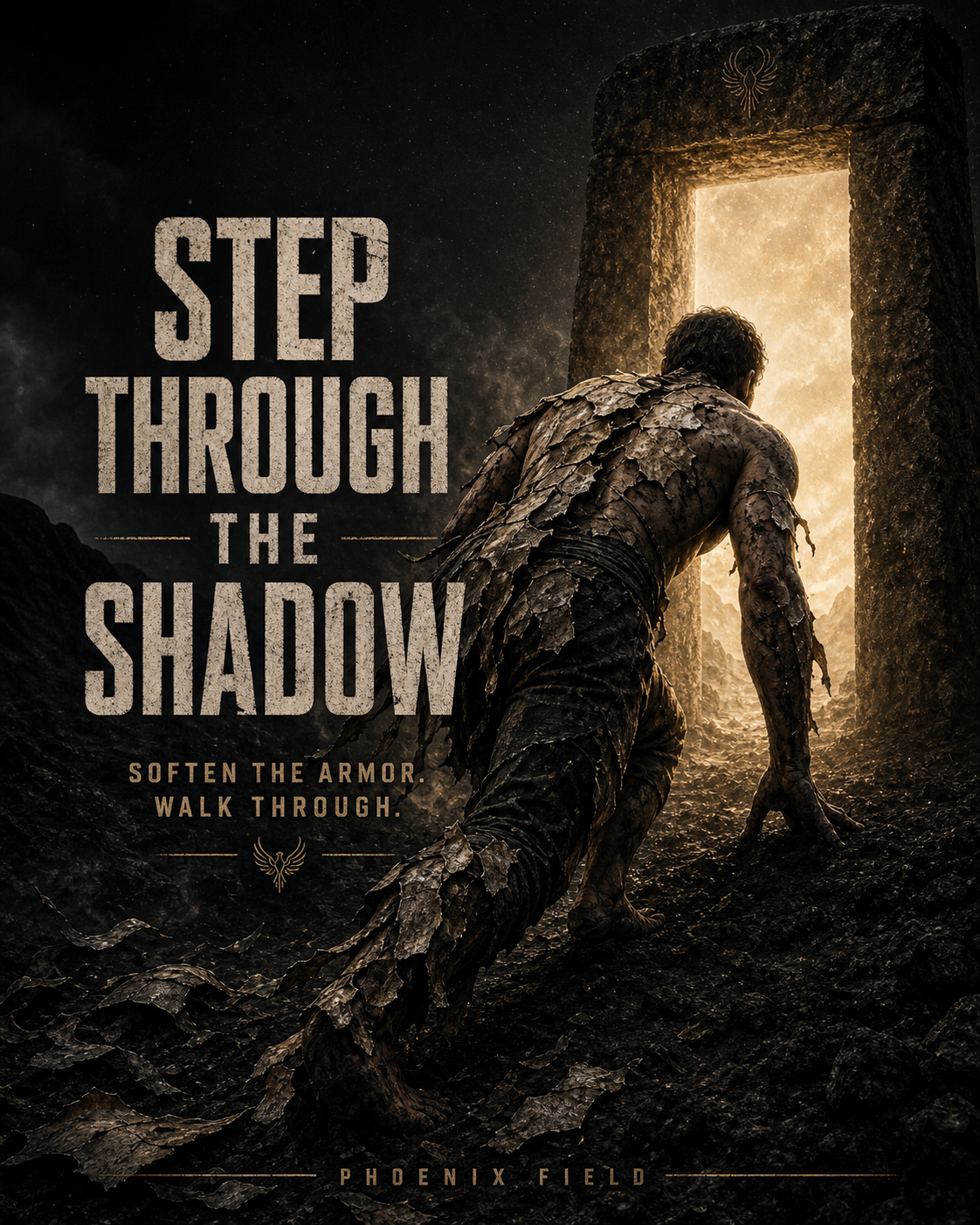
Tool’s “Forty-Six & 2” Is Basically a Shadow Work Anthem
Some songs don’t explain shadow work.
They drag you into it.
That’s what Tool’s Forty-Six & 2 does. It doesn’t talk about healing like a clean breakthrough or a polished self-improvement project. It talks about the part most people would rather skip.
The digging.
The crawling.
The old armor.
The scabs.
The body memory.
The thing underneath the thing.
That’s why the song hits so hard.
Because shadow work is not just sitting around thinking about your darker side.
It’s the work of meeting what you had to bury in order to survive.
The rage.
The grief.
The fear.
The shame.
The hunger.
The old defenses.
The needs you learned to disown.
The parts of you that adapted so well they became your personality.
That’s the shadow.
Not evil.
Not broken.
Not something to destroy.
Just the material you pushed out of sight because, at some point, it did not feel safe to carry it consciously.
And the body remembers.
That’s one of the strongest parts of the song. It doesn’t keep shadow work up in the head. It brings it down into the muscles. Into old pattern. Into the nervous system. Into the places where survival became automatic.
A lot of what we call “who I am” is actually old protection with a name tag on it.
The strong one.
The angry one.
The quiet one.
The useful one.
The one who never needs anything.
The one who keeps the peace.
The one who stays ready for impact.
That stuff does not disappear just because we understand it.
It has to be felt.
Met.
Questioned.
Softened.
That’s the part people underestimate.
Shadow work is not about becoming a better-looking version of yourself.
It’s about becoming less split.
Less divided between who you perform as and what is actually living underneath.
And that can get uncomfortable fast.
Because the shadow is not only where we hide our pain.
It’s also where we hide our power.
Our tenderness.
Our voice.
Our desire.
Our grief.
Our capacity to need and be met.
Our ability to say no.
Our ability to stop carrying what was never ours.
Sometimes the thing we call darkness is just the part of us that got exiled before it had a chance to become whole.
That’s why the image of shedding skin matters.
Real change does not always feel like rising.
Sometimes it feels like molting.
Something old starts coming off.
A survival identity loosens.
The armor that once protected you starts becoming too tight.
The body begins telling the truth before the mind has language for it.
That stage can feel messy.
You may feel more sensitive, not less.
More reactive before you feel regulated.
More aware of old wounds before you feel free of them.
That does not mean the work is failing.
It may mean the numbness is wearing off.
And that is where the real choice begins.
Not the pretty choice.
The honest one.
Do I keep clinging to the old defense because at least it feels familiar?
Or do I step through what I’ve been avoiding?
That’s the movement inside Forty-Six & 2.
Not escape.
Not bypass.
Not pretending the shadow is gone.
Stepping through it.
There’s a difference.
Escaping the shadow means you’re still afraid of yourself.
Stepping through it means you’re willing to meet the parts of you that got left behind.
That is not weakness.
That is maturity.
And for a lot of men especially, that may be the real work.
Because many of us were trained to build armor before we were ever taught how to feel.
We learned to function.
To push through.
To perform okay-ness.
To be useful.
To be hard to reach.
To call numbness strength because nobody gave us a better language.
But eventually, the armor starts costing more than it protects.
You can survive inside it.
But you cannot fully live inside it.
That’s where shadow work begins to matter.
Not as a trend.
Not as a personality label.
Not as spiritual theatre.
As the slow, brutal, liberating process of telling the truth about what you’ve been carrying and what it turned you into.
The goal is not to become pure.
The goal is to become whole enough that your hidden material stops running your life from underneath.
Whole enough to feel grief without collapsing.
Whole enough to feel anger without becoming it.
Whole enough to need without shame.
Whole enough to soften without disappearing.
Whole enough to stop confusing protection with identity.
That’s the other side.
Not perfection.
Integration.
The shadow does not need to be killed.
It needs to be listened to.
Because buried inside it is usually a younger part of you still trying to protect your life with old instructions.
And at some point, you have to turn toward that part and say:
I see what you did.
I see why you did it.
But we are not living there anymore.
That is the work.
You step down.
You meet what’s there.
You stop outsourcing your truth to the mask.
You soften the old armor.
You come out less split than you went in.
That’s why Forty-Six & 2 still lands.
Because it understands something most polished healing language misses.
Change is not always beautiful while it is happening.
Sometimes it crawls.
Sometimes it shakes.
Sometimes it digs through the old muscle memory.
Sometimes it looks like standing face to face with the part of yourself you spent a lifetime avoiding.
And then choosing to move through anyway.
That’s shadow work.
Not becoming someone else.
Becoming honest enough to stop abandoning yourself.
If this speaks to something you’ve been carrying, save it.
And if you’re in the part where the old armor is starting to crack, don’t mistake that for failure..
Sometimes that’s the first sign the real self is still alive.
