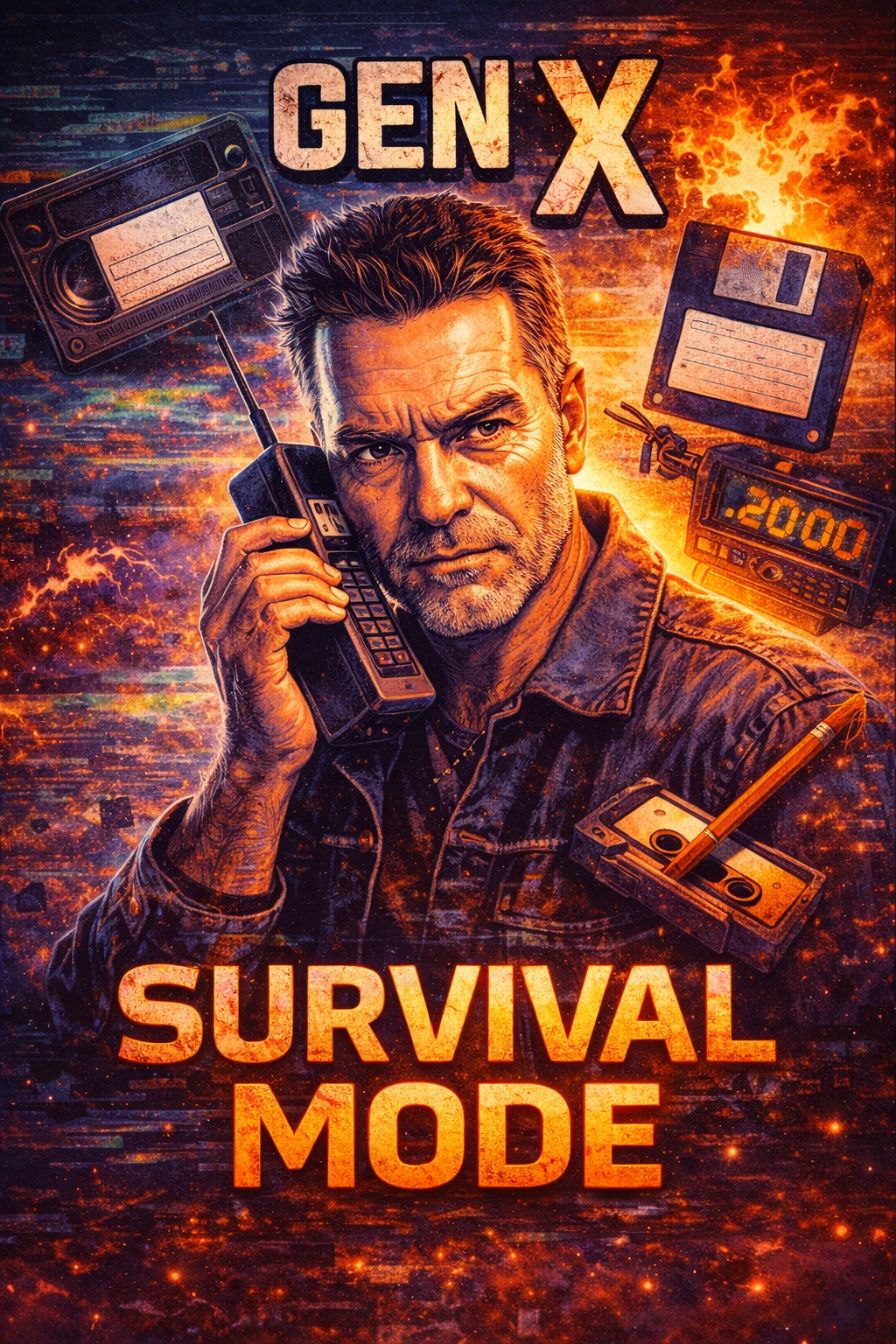
Survival Mode
Survival mode gets talked about like it’s a mood.
It’s not.
It’s an operating system.
It’s what happens when a body learns that safety is inconsistent, love is conditional, chaos is normal, and vigilance is more useful than softness.
Not just stress.
A full-body adaptation.
What Survival mode Actually Is
Survival mode is the nervous system choosing protection over presence.
Not because you’re weak. Because at some point protection worked better than openness.
The body learns a specific set of rules:
Stay alert. Stay useful. Stay small. Stay ready. Don’t need too much. Don’t relax too soon. Don’t assume it’s safe just because it’s quiet.
That becomes your version of normal.
After a while it doesn’t feel like survival mode.
It feels like personality.
“I’m just intense.” “I’m just independent.” “I’m just better when I stay busy.” “I don’t really need much.” “I’m fine.”
But under that is a body that never got the memo that the danger passed.
How It Operates
Survival mode runs in a loop.
Something happens or even starts to go well and the body tightens first. Then the mind builds the story.
The body doesn’t wait for logic. It scans first. Narrates second.
So the sequence is: tension, brace, scan, interpret, protect.
That protection looks different depending on the person. For some it looks like anxiety. For others numbness. For others control. For others it looks like being the Strong One. For others it looks like disappearing inside competence.
A lot of people think survival mode is panic.
A lot of the time it’s much quieter than that.
It’s always anticipating and never fully arriving. Finding it hard to rest without guilt. Treating peace like the moment before impact. Distrusting ease. Settling before disappointment can happen. Hearing be careful every time life opens.
Where Survival Mode lives In The Body
The body keeps score long after the mind has a theory.
Survival mode lives in the chest tightening before a decision. The behind-the-ears vigilance. The jaw clench. The held breath. The inability to cry fully. The startle when things get too good. The exhaustion after being around people. The restless need to solve something even when nothing is wrong.
The body becomes a broadcast tower for old conditions.
If the signal is threat everything gets interpreted through threat.
A purchase becomes danger. A boundary becomes danger. Being seen becomes danger. Success becomes danger. Calm becomes suspicious.
That’s why people can know better and still feel the old reaction.
Insight updates faster than the body does.
What It Does To Relationships
Survival mode doesn’t stay in the body. It shapes everything around you.
It can make you scan other people instead of asking directly. Mistake neutrality for judgment. Hide grief because being seen feels weak. Over-explain so you don’t get misread. Go silent when something hurts. Become hyper-capable so no one sees the need underneath.
It also shapes what you tolerate.
If chaos was normal, unhealthy dynamics feel familiar enough to stay in. If you were trained into a role you keep replaying it the regulator, the peacekeeper, the one who carries it, the one who absorbs it, the one who doesn’t get to have needs.
Then one day you start setting boundaries and everyone calls you changed.
You didn’t change.
You stopped stabilizing the room at your own expense.
That’s often when survival mode gets exposed most clearly when you stop playing the role it built you for.
What It Does To Everything Else
Survival mode shapes money, work, creativity, and identity.
It makes a person settle for less and call it maturity. Confuse contraction with wisdom. Overwork to earn worth. Distrust expansion. Default to good enough. Stay in preparation instead of expression. Choose the safe compromise over the aligned fit.
It also makes someone incredibly capable.
That’s the part people miss.
Survival mode often produces competence, endurance, perception, emotional restraint, and high-functioning adaptation.
That’s why it gets praised.
From the outside it can look like strength.
From the inside it often feels like pressure, vigilance, numbness, resentment, fatigue, and never really landing.
Survival mode wears a suit well.
What It Isn’t
It is not a moral failure. Not laziness. Not being dramatic. Not weakness. Not proof you are broken.
It is adaptation.
The problem is not that it formed.
The problem is when it keeps running after the environment changes.
What Healing Actually Looks Like
Healing survival mode is not becoming soft and helpless.
It’s becoming safe enough to stop bracing all the time.
It’s learning:
I don’t have to scan every room. I don’t have to downgrade every desire. I don’t have to earn rest through exhaustion. I don’t have to hide grief to stay dignified. I don’t have to confuse tension with truth.
Healing looks smaller than people think.
Not fireworks. Not enlightenment.
It looks like noticing the flare before obeying it. Asking instead of scanning. Buying the thing you actually want instead of settling. Letting one tear come instead of choking it back. Not responding to the message that pulls you back into the old role. Sitting in a quiet morning and realizing nothing needs to be solved right now.
That’s survival mode loosening.
Not all at once.
A thousand small moments where the old code says brace.
And something steadier says no.
We’re safe enough to stay.
